Back to JournalSacred Spaces

Pooja Room Designs: A Complete Guide to a Sacred, Serene Home Temple

Lintel Atelier Studio April 27, 2026 9 min read

The pooja room is the quietest, most personal space in an Indian home - a daily threshold between the everyday and the sacred. A well-designed mandir is not just decoration; it is composed with intention through orientation, material, light and proportion. This guide walks through every decision behind a pooja room that feels serene, rooted in tradition and beautifully resolved within a modern home.

Pooja Room Mandir Vastu Bangalore Luxury
01

Vastu, Orientation & Choosing the Right Spot

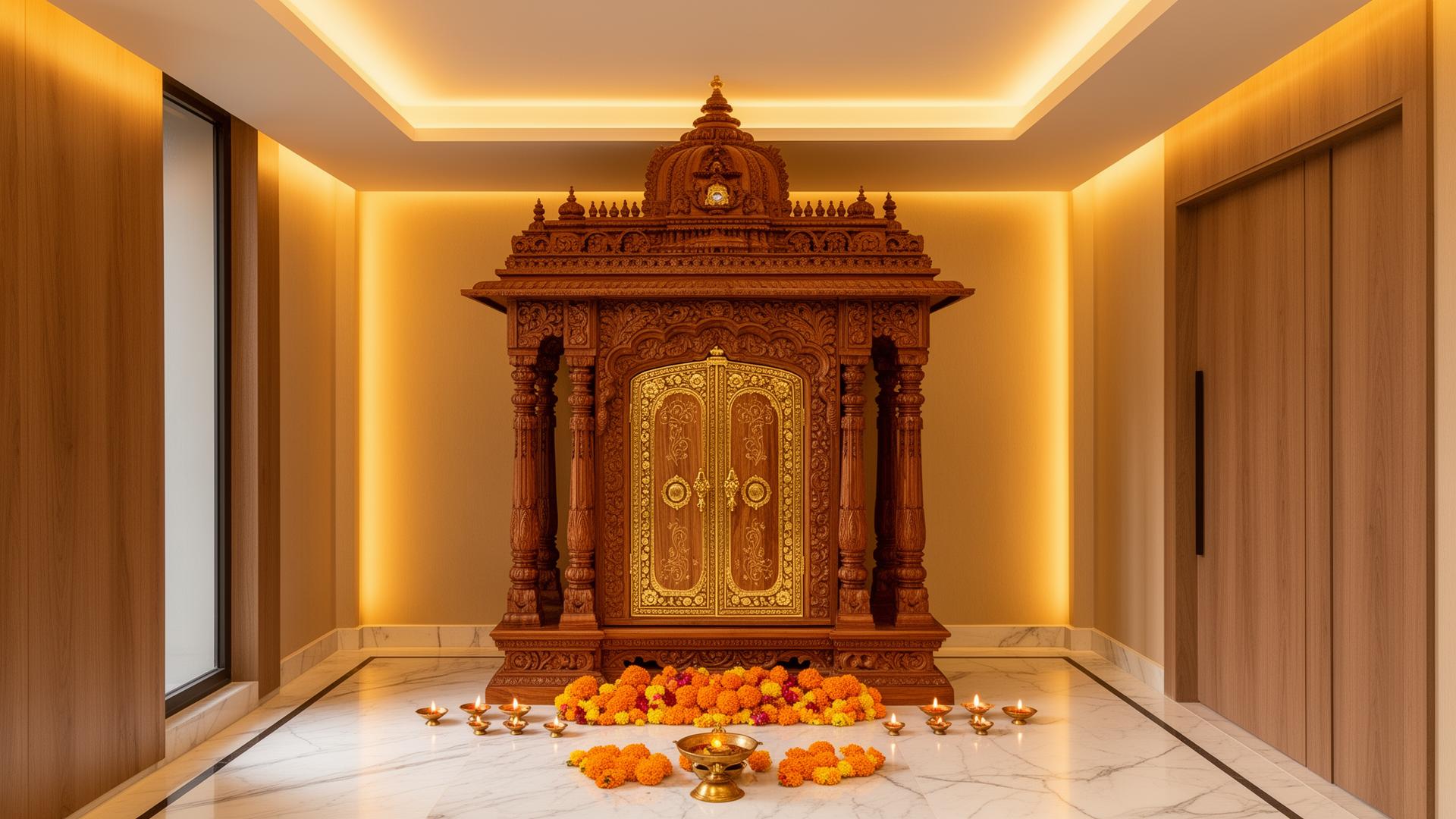
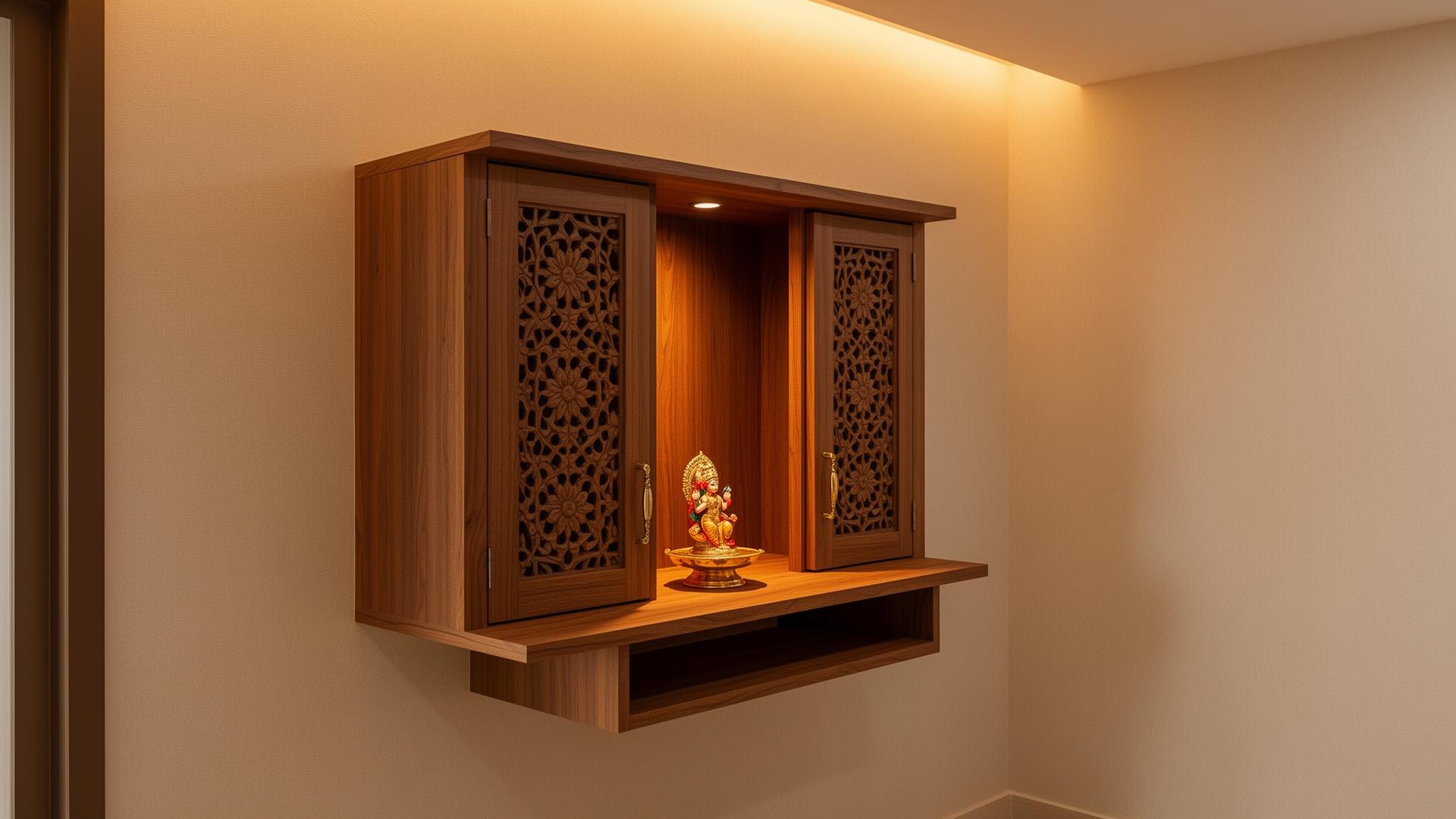
Traditionally, the pooja room is placed in the north-east (Ishanya) corner, with the devotee facing east or north while praying. Avoid placing the mandir under a staircase, against a bathroom wall, or directly in the bedroom. In compact apartments, a dedicated alcove in the living area or a quiet passage corner can work beautifully - what matters most is calm, ventilation and unobstructed approach.
Vastu, Orientation & Choosing the Right Spot
02

Mandir Typologies: From Wall-Mounted to Walk-In

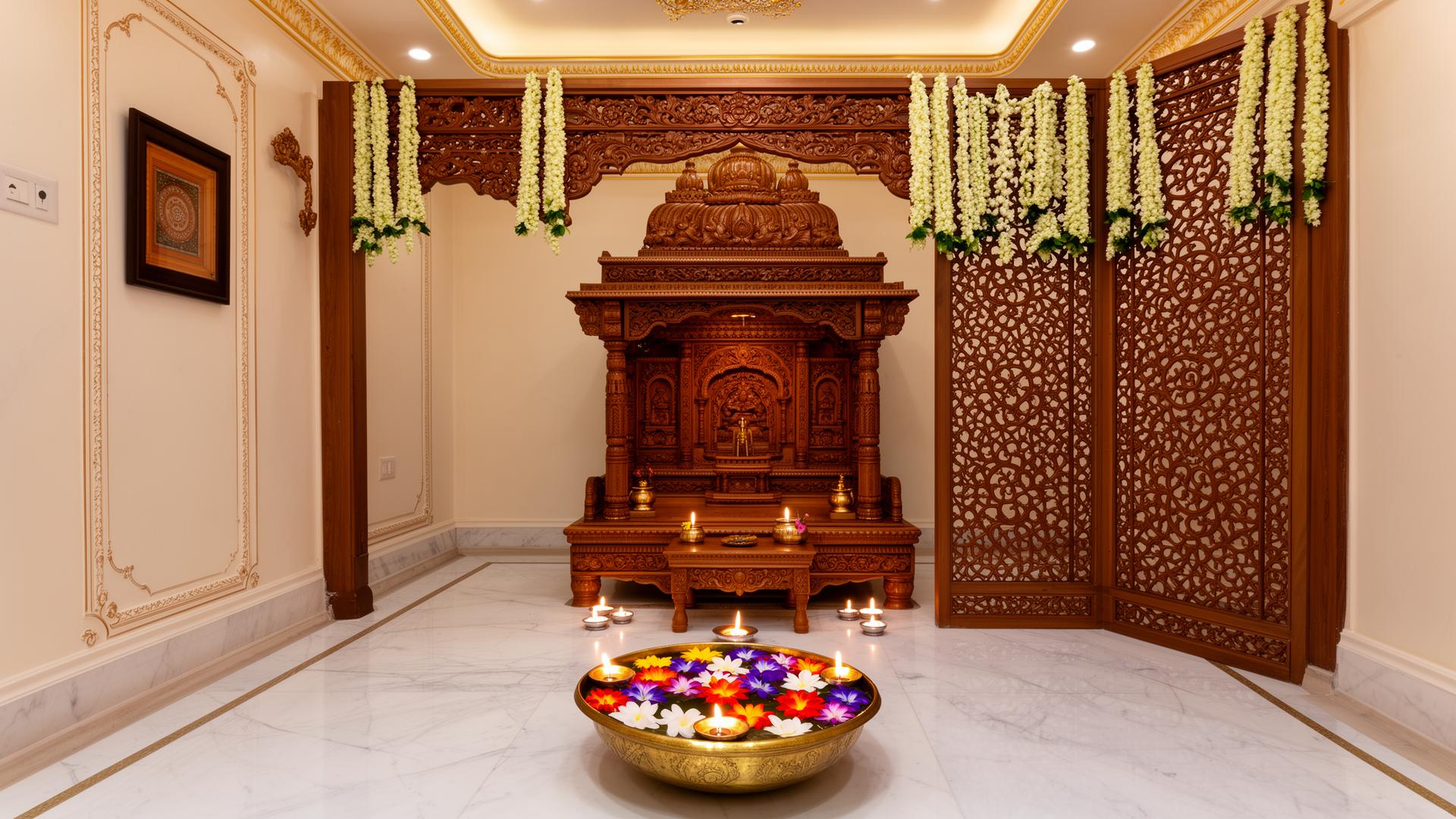
Wall-mounted floating mandirs suit compact apartments and rental homes. Floor-standing carved temples in teak or rosewood become an heirloom centrepiece in larger residences. A dedicated pooja room with a jali partition offers full privacy for daily rituals and festivals. Choose by the rituals you actually perform - not by what looks impressive in a showroom.

Mandir Typologies: From Wall-Mounted to Walk-In
03

Materials That Honour Tradition

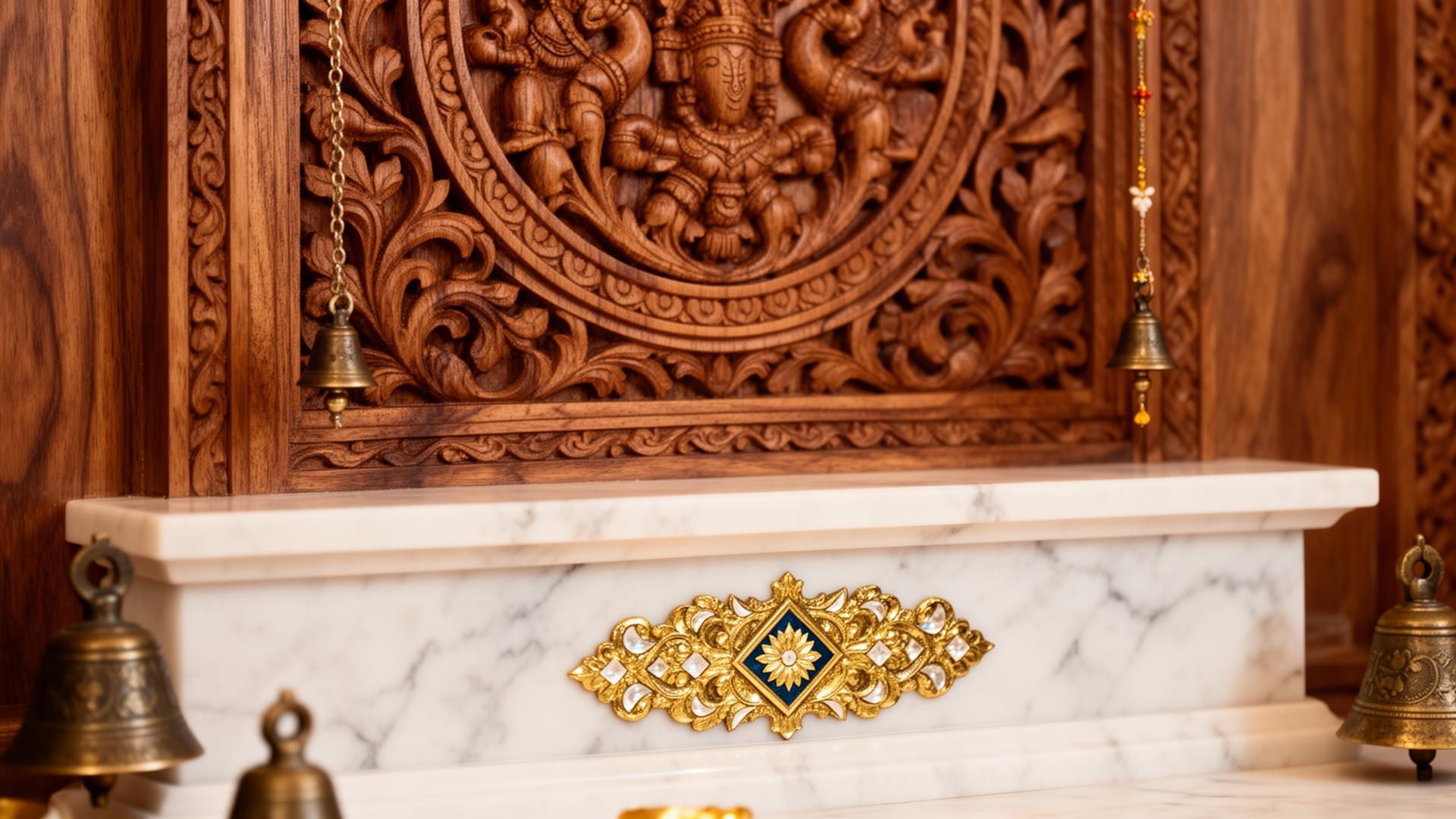
Hand-carved Burma teak, rosewood and sheesham age into deeper character over decades and resist termite damage when treated correctly. Pair the wooden mandir with a Makrana white marble or onyx base for purity and easy cleaning. Brass inlay, antique brass bells and meenakari accents bring jewellery-grade detail. Avoid laminates and synthetic finishes in the immediate prayer zone - they feel out of place and don't endure heat from diyas.

Materials That Honour Tradition
04

Lighting: Sculpting a Sacred Atmosphere

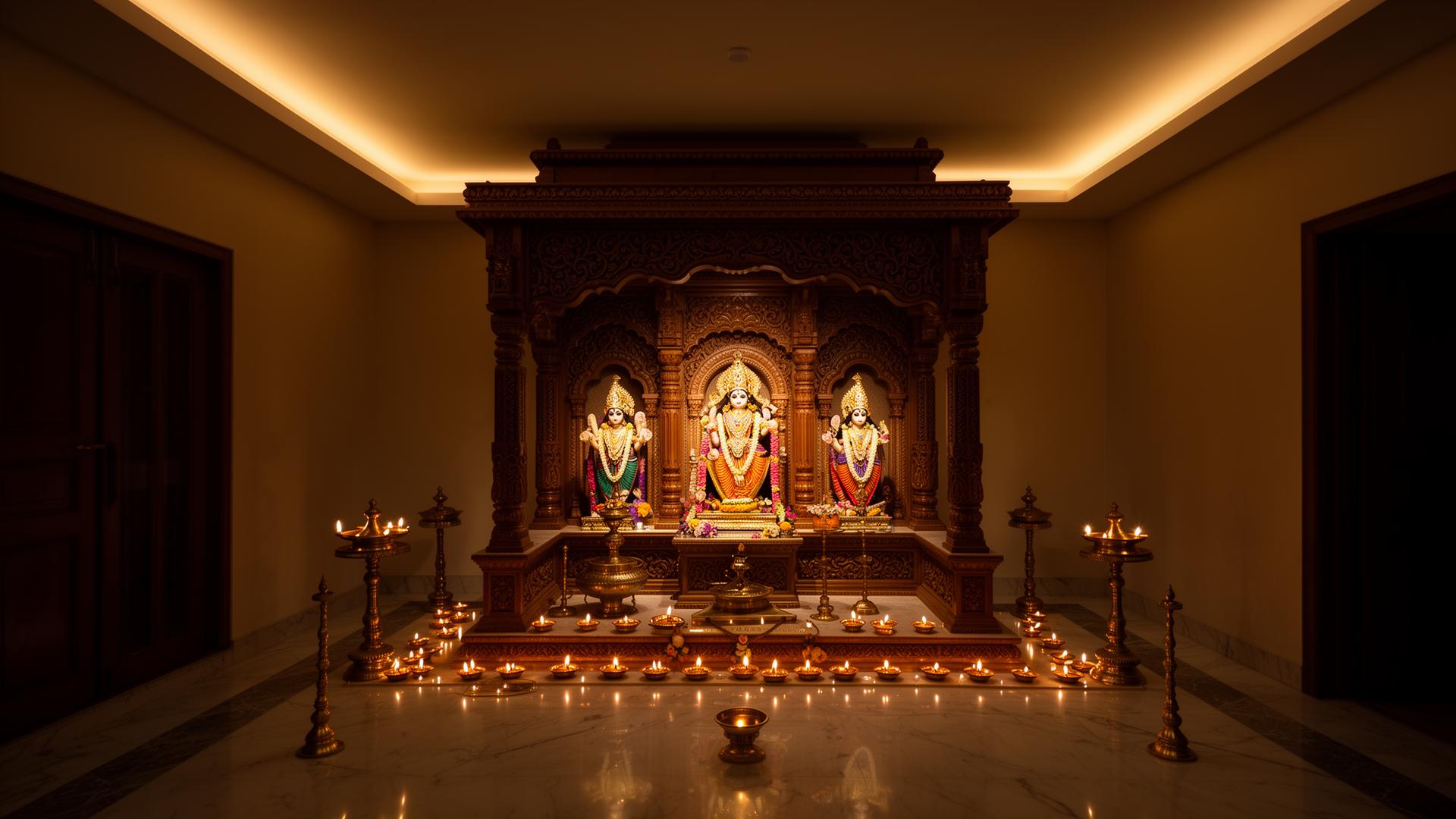
Three layers, always. Warm 2700K cove lighting around the ceiling for ambience, a focused 3000K spotlight on the deities for accent, and the natural glow of brass diyas, oil lamps and tealights for ritual warmth. Add a dimmer for evening aarti and a small motion-sensor LED inside the mandir cabinet. Avoid cool white LEDs - they flatten the carving and kill the mood.

Lighting: Sculpting a Sacred Atmosphere
05

Storage, Jali Screens & Daily Rituals

Plan dedicated storage for puja thalis, brass lamps, agarbatti, books and festival items - usually a base drawer below the mandir and a discreet upper shelf for the conch and bells. A carved wood or CNC-cut jali screen can shield the prayer area from view while keeping it ventilated. Provide a small platform for seating, a brass urli for floral water, and a low marble shelf for the daily naivedyam.

Storage, Jali Screens & Daily Rituals
The Six Principles

What Master Design Always Honors

Vastu-Led Placement

North-east orientation with the devotee facing east or north for daily prayer.

Natural Materials

Hand-carved teak, marble base and brass - finishes that age into heirlooms.

Warm Layered Light

2700K cove, focused deity spot and the live glow of brass diyas.

Ritual-Ready Storage

Dedicated drawers for thalis, lamps, agarbatti and festival essentials.

Ventilation & Smoke Flow

Jali screens and discreet vents keep the space fresh through daily aarti.

Quiet & Privacy

Acoustic separation from TV and traffic zones for true contemplation.

Curated Partners

Brands We Trust & Specify

The world's finest manufacturers - woven into every master interior we deliver.

Aarsun WoodsHeritage hand-carved temple joinery
Saraswati Murti Kala KendraMarble murtis & temple bases
Jaipur RugsHand-knotted prayer mats & dhurries
Frazer & HawsSilver-plated puja accessories
Nakshatra BrassHeritage brass lamps & urlis
HäfeleDiscreet hardware & integrated lighting
Asian GranitoOnyx, marble & sintered stone bases
Philips HueTunable warm-white temple lighting
FAQ

Questions, Answered

The ideal location is the north-east (Ishanya) corner, with the devotee facing east or north. Avoid placing it under a staircase, adjacent to a toilet wall, or inside the master bedroom.

Ready for a master interior of your own?

Let's design a home that feels inevitable. Book a private consultation with our atelier.